Advertisements
Do you want to learn real and effective ways to How to save on electricity billsThen you're in the right place.
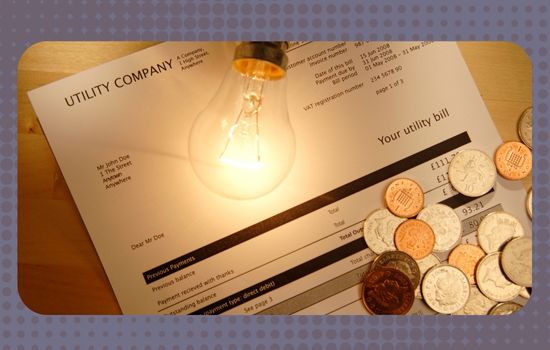
In this article you will find a summary at the beginning, followed by concrete strategies you can apply today, updated data for the Mexican context, and answers to frequently asked questions.
Our goal: that your next bill surprises you with a low bill, not a high one.
Summary
You'll see why electricity rates have changed in Mexico, what smart homes are doing to reduce their consumption, and how small actions (sometimes even analog) can make a big difference.
We'll cover current costs, habits to review, technologies and behaviors that work, and finally a frequently asked questions section to clear up any doubts.
Advertisements
The Mexican context: Why are you interested in saving now?
Understanding the scenario is key to knowing How to save on electricity bills with sense.
In Mexico, the average residential price per kWh is around US $0.11 per kWh (≈ MXN 2,025/kWh) in March 2025.
Although the cost may seem moderate on a global scale, the burden is felt in household budgets.
For example, an ENIGH survey report indicates that for a family of four with a consumption of 400 to 600 kWh per month, electricity expenses can range between MX$800 and MX$1,500 per month.
This variability makes understanding How to save on electricity bills be not only useful, but necessary.
Saving money isn't just about paying less:
It's a matter of increased well-being, reduced financial stress, and also energy sustainability (an analogy:
Saving electricity is like brushing your teeth every day (a small action that prevents big problems later).
Practical strategies to reduce your bill
Here I present a set of tactics, organized and argued, so that you can apply them according to your context.
1. Know your consumption and detect leaks
Before cutting back, it's worth seeing where consumption is "escaping".
Check how many kWh you consumed last month. Identify appliances that remain on standby or lights left on unnecessarily.
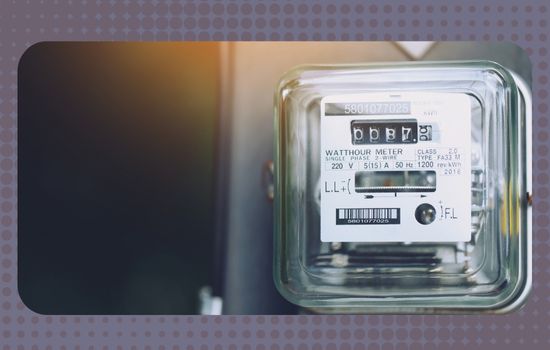
Use a consumption meter or check the bill breakdown.
Example: In a home with air conditioning, it was discovered that the equipment was running even when no one was there; by programming it correctly, consumption was reduced by 15 %.
This type of detection is key to knowing How to save on electricity bills because it shows you where to act first.
2. Optimize the use of air conditioning and ventilation
In warm areas of the country, air conditioning usually represents a substantial part of the expense.
Take advantage of natural ventilation before turning on the AC.
Set the thermostat to a reasonable temperature (for example, 25-26 °C) and avoid lowering it too much.
Clean filters to ensure the equipment operates efficiently.
For example, a family that reduced the AC temperature setting by 1°C managed to save about 8 % on their bill without losing comfort.
3. Efficient lighting and modern appliances
Replace incandescent bulbs with LEDs; their energy consumption is substantially lower.
Consider paying attention to the efficiency label when buying new equipment.
Unplug chargers, "ghost" devices, and appliances that are only plugged in but not in use.
These types of actions may seem trivial, but accumulated they result in real savings, which are a central part of How to save on electricity bills.
4. Adjust schedules and rates as possible
Depending on your area and provider, there may be more favorable rates during off-peak hours.
Program washing machine or dishwasher for off-peak hours (if your tariff allows it).
In the case of higher consumption appliances (such as pumps or heat pumps), avoid using them during peak hours if that implies a higher cost per hour.
Although not all households have variable rates, it is a way to consider to optimize spending.
5. Thermal insulation and intelligent behavior
Passive measures can make a big difference:
Seal doors and windows that let in drafts.
Use curtains or blinds to block direct sunlight during peak hours. In winter, make sure the house retains heat, and in summer, that it doesn't accumulate heat.
Example 2: In a concrete house without adequate insulation, the owner installed weatherstripping and dark blinds.
Result: It reduced its cooling consumption by 12% in a very hot summer.
These actions illustrate a solid way to put it into practice How to save on electricity bills through habits and structural improvements.
Technology worth considering
While some of the above measures require little or no cost, others may involve investment.
But the payback period can be quick.
Domestic solar panels or micro-inverters: depending on your location, payback period of 5 to 7 years; it also helps the environment.
Highly efficient heat pumps: replace old heating/cooling systems with lower consumption.
Smart thermostats: they adjust operating cycles according to activity and presence, reducing consumption without the change being noticeable.
Power consumption monitor: shows you in real time when usage increases, making it easy to make instant adjustments.
Investing in technology and combining it with good habits strengthens the strategy of How to save on electricity bills permanently, not just occasionally.
A key piece of information for your strategy
A relevant statistic: in Mexico, the average residential price was approximately US $0.11 per kWh in December 2024.
This means that every kWh you manage to avoid has a direct cost that translates into savings for you.
For example, if you reduce 50 kWh per month, at that price it would be equivalent to about US$$5.50 (~MX$$100 at the exchange rate) of savings; over the course of the year it is more than MX$$1,200.
This type of calculation demonstrates that, although it may seem small, cumulative impacts matter when considering How to save on electricity bills.
Common myths and mistakes to avoid
“If I unplug everything, I turn off the bill.” The minimum consumption of the home continues, and certain appliances (refrigerator, network) must be maintained.
The focus should be on reducing, not eliminating.
“Old appliances don’t cost that much” In general, outdated equipment consumes more energy; replacing it can generate significant savings.
“The strong sun doesn’t matter, I have a subsidy.” Even with subsidies, the bill may increase due to excessive consumption.
Understanding how your tariff works is part of How to save on electricity bills.
“Investing in technology is expensive, it’s not worth it.” It depends on the case: if the potential savings are significant (due to climate, tariff or usage), the investment pays off.
Proper evaluation is key.
Read more: Most important social benefits in 2025
Conclusion
Know How to save on electricity bills It is a combination of awareness, action, and strategy.
It's not just about turning off the lights; it's about understanding your usage patterns, adjusting habits, leveraging technologies, and implementing structural improvements where possible.
When you pause, review your bill, and commit to change, you create an impact that goes beyond money: you improve your peace of mind, ease your budget, and participate in a more responsible use of energy.
The challenge is simple: instead of letting the bill decide for you, you decide your bill. Make next month different.
Read more: Energy subsidies: which countries will offer them in 2025
Frequently Asked Questions (FAQ)
When is a good time to apply these strategies?
As soon as possible.
Most households can start with cost-free actions (such as adjusting the thermostat or monitoring standby usage) and progress to investments if appropriate.
How much can I really save?
It depends on current consumption, tariff, and weather.
But even modest reductions (e.g., 10 %) mean visible savings on the annual bill.
Do I need to replace my entire house or equipment?
Not necessarily.
You can prioritize the equipment or habits that have the greatest impact on your home: air conditioning, lighting, insulation.
Then, if it's convenient, invest in technology.
Will residential electricity rates in Mexico increase?
Rates may vary by country, region, and policy.
Currently, the residential cost level is around US$$0.11/kWh.
But the best approach remains controlling consumption, regardless of how the tariff evolves.