Advertisements
Gamification in education: learning through play It has become established in 2025 as a serious, effective and evidence-backed pedagogical strategy, not as a superficial trend.
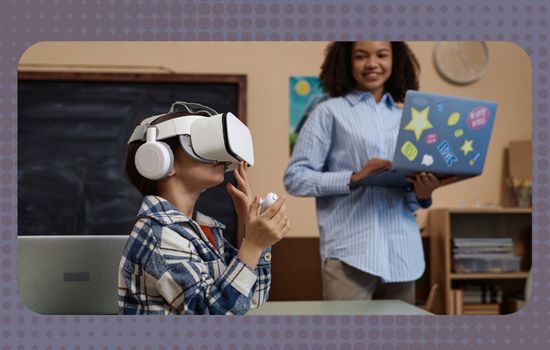
Integrating game dynamics into learning responds to a real need: to increase motivation, improve understanding and encourage active participation in an increasingly challenging and diverse educational context.
Before moving on, it's worth knowing what you'll find in this article: a clear explanation of why gamification works in education, how to apply it with pedagogical criteria, real benefits and limitations, and two original examples of educational use.
A simple analogy to understand its impact, a relevant statistic backed by a reliable source, a practical table and, at the end, direct answers to the most frequently asked questions.
Why gamification is gaining ground in education today
Talk about Gamification in education: learning through play It involves understanding a profound change in the way we learn.
Advertisements
Today's students grew up in digital, interactive, and dynamic environments.
Expecting them to respond with the same level of attention to exclusively expository methods is unrealistic.
Gamification does not infantilize learning; it structures it in a way that is closer to how the brain processes challenges, rewards, and progress.
Points, levels, immediate feedback, and clear objectives activate intrinsic motivation when used with educational purpose.
According to a report by the Organisation for Economic Co-operation and Development (OECD), published as part of its analysis of educational innovation, Active methodologies, including gamification, show significant improvements in student participation and persistence.especially in hybrid and digital contexts.
The data reinforces a reality observable in classrooms of different levels.
What gamification really is and what it isn't
It's important to clarify this from the beginning. Gamification in education: learning through play It does not mean turning every class into a game or replacing content with entertainment.
It involves applying game mechanics —challenges, goals, feedback, narrative— to specific learning objectives.
The difference is key:
- It does not replace the evaluation, it complements it.
- It doesn't eliminate the effort, it makes it more meaningful
- It doesn't lower the academic level, it makes it more accessible
When designed correctly, gamification enhances understanding and engagement without sacrificing depth.
The role of the teacher in gamified environments
Technology and play-based learning don't work on their own. The teacher's role becomes even more crucial.
Designing gamified experiences requires clarity of objectives, knowledge of the group, and adaptability.
The teacher ceases to be merely a transmitter of information and becomes a designer of learning experiences.
In that process, Gamification in education: learning through play It acts as a tool, not as an end.
Educational benefits supported by practice
Various educational institutions have adopted gamification because it offers concrete advantages:
- Increase active participation
- Improves content retention
- It fosters student autonomy
- Reduce the fear of making mistakes through trial and learning.
These benefits appear when the strategy is integrated into the curriculum and not used in isolation.
Example 1: Gamification in secondary education
A high school implements a mission system for the subject of science.
Each thematic unit is presented as a challenge with clear objectives, immediate feedback, and symbolic rewards linked to academic progress.
Participation increases noticeably and students begin to collaborate to solve complex challenges.
Learning is not simplified; it becomes more accessible and meaningful.
This case reflects how Gamification in education: learning through play It can strengthen understanding without diluting rigor.
An analogy to understand its impact
Gamification works like a well-designed map during a journey.
The path remains demanding, but the signs, the milestones, and the feeling of progress prevent the traveler from giving up before reaching the destination.
From this perspective, Gamification in education: learning through play It does not eliminate the difficulty of learning, but rather better guides the journey.
Key elements of an effective gamified experience
Not all play-based activities lead to learning. Some components are essential:
- Clear educational objectives
- Understandable and fair rules
- Constant feedback
- Visible progress
Without these elements, the experience loses its pedagogical meaning and is reduced to a superficial activity.
Table: Elements of gamification and their educational function
| Element | Pedagogical function |
|---|---|
| Points | They reinforce progress |
| Levels | They visualize the progress |
| Challenges | They stimulate critical thinking |
| Symbolic rewards | They increase motivation |
| Narrative | It provides context to learning |
This structure explains why Gamification in education: learning through play It can be integrated into different subjects and levels.
Read more: CRISPR gene editing: how it works
Example 2: university education and self-directed learning
At a university, an economics course introduces gamified simulations where students make financial decisions in controlled scenarios.
Every choice generates visible consequences and immediate feedback.
Understanding abstract concepts improves because learning is linked to experience.
Here, Gamification in education: learning through play It does not replace theory, it makes it applicable.
Real risks and how to avoid them
Although it offers clear advantages, gamification also presents risks if applied without careful consideration:
- Excessive focus on rewards
- Poorly managed competition
- Loss of the educational objective
To avoid this, it is key to prioritize learning over reward and to encourage collaboration rather than constant comparison.
Gamification and educational technology in 2025
Current digital platforms facilitate the implementation of gamified strategies thanks to learning analytics, personalized tracking, and adaptive content.
However, technology does not guarantee success. Gamification in education: learning through play It depends more on the pedagogical design than on the tool used.
Intrinsic vs. extrinsic motivation
A common mistake is relying solely on points or rewards. Sustainable motivation arises when the student perceives meaning, challenge, and real progress.
When implemented effectively, gamification strengthens intrinsic motivation, it doesn't replace it. Therefore, each activity must have a clear educational purpose.
Impact at different educational levels
From basic education to corporate training, gamification demonstrates versatility.
At early ages it stimulates curiosity; at advanced levels it promotes decision-making and strategic thinking.
This adaptability explains why Gamification in education: learning through play It remains current and is expanding.
Assessment and meaningful learning
Evaluating in gamified contexts does not mean eliminating rigor. On the contrary, it allows us to observe processes, not just final results.
Continuous feedback improves learning and reduces anxiety associated with traditional assessments.
Conclusion: Learning through play is learning better.
Gamification in education: learning through play It does not propose a shortcut, but a better-designed path.
It combines motivation, structure, and challenge to meet current educational needs.
When applied with pedagogical criteria, it transforms the learning experience without losing depth or rigor.
In 2025, education also involves knowing how to motivate, and gamification offers an effective way to achieve this.
Read more: Global trends in early childhood education
Frequently Asked Questions
Does gamification reduce the seriousness of learning?
No. When applied correctly, it increases engagement without affecting academic depth.
Does it only work with young students?
No. It is also effective in higher education and vocational training.
Does it require advanced technology?
Not always. Many gamified strategies can be implemented with basic resources.
How to avoid negative competition?
Prioritizing collaborative dynamics and shared objectives.
Does gamification replace other methods?
No. It complements and enhances existing methodologies.
Adopt Gamification in education: learning through play It involves understanding how people learn today and designing experiences that connect knowledge, motivation, and purpose.
When learning is experienced as a meaningful challenge, the educational impact multiplies.