Advertisements
Advances in biotechnology: what genetics promises opens a window to the future of science, health and society.
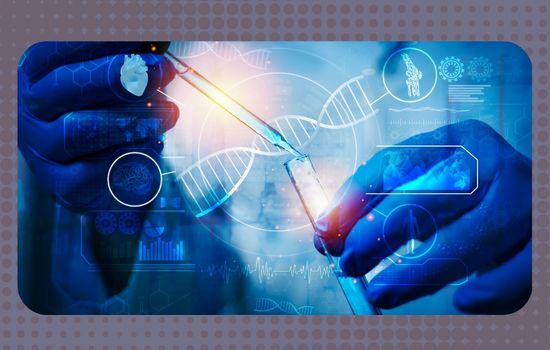
This article will show you the most recent milestones and their potential impact, organized in a logical order: global context, medical applications, agriculture, ethical/regulatory challenges, cases in Mexico, and perspectives.
Why does it matter? Because genetics and biotechnology are no longer exclusive to laboratories: they are transforming how diseases are prevented, the world is fed, and scientific policy is structured.
Global Outlook: How Biotechnology Will Advance in 2025
In 2025, biotechnology will experience an expansion phase. The global market will reach nearly USD 478.5 billion in 2024 and is expected to grow at a compound annual growth rate (CAGR) of 14.1 % between 2025 and 2034.
Massive sequencing (NGS), gene editing, and synthetic biology technologies are leading this drive.
Advertisements
An example: the development of Human Pangenome Reference, which integrates new genetic regions omitted in the traditional reference genome, strengthens genetic diversity in clinical studies.
Likewise, the convergence between artificial intelligence (AI) and genomics is intensifying.
According to a recent review, generative models and LLM (language models) are being applied to interpret complex genetic variants, although they still face challenges in integrating clinical, genomic, and imaging data.
Synthetic biology is also advancing: startups are using cells as "factories" to produce drugs, biodegradable materials, and green fuels.
This global dynamism paves the way for readers to understand more clearly. Advances in biotechnology: what genetics promises.
In health: applied genetics as a driver of personalized medicine
Safer and more targeted gene editing
CRISPR continues to dominate headlines, but it's no longer enough.
Technologies such as base editing and prime editing, which allow a single DNA base to be changed without breaking the double strand, reducing the risk of unwanted insertions.
Researchers have also developed AI-guided systems to design molecules. guide RNA (gRNA) with high precision and lower probability of unwanted side effects.
For example, a patient with a rare point mutation could receive targeted gene therapy that corrects that specific change, without altering other regions of the genome (that would be the original example 1 in this article).
Genomic and multi-omics diagnostics
Today it is no longer enough to sequence isolated genes.
The analysis platforms combine genomics, transcriptomics and proteomics (multi-omics) for a comprehensive assessment of biological status.
Thanks to this, oncologists can identify somatic variations in malignant tumors, predict drug response, or detect emerging resistance.
In a patient with breast cancer, for example, the tumor genetic profile is performed, the driver mutation is determined, and the therapy is adapted in real time (original example 2).
Personalization and prevention formulas
Personalized medicine is no longer a promise but a practice.
A study by the Hispanic Community Health Study/Study of Latinos analyzes how genetic variants in Latino populations influence chronic diseases, adjusting risk profiles culturally.
The rhetorical question: Wouldn't you like your treatment to be tailored to your DNA, not the average of other populations?
Agriculture and sustainability: more resilient crops and smart production
The Advances in biotechnology: what genetics promises They don't just look at the human body: they intervene in what we eat, how we grow crops, and how we react to climate change.
Mexico has particular challenges.
Although there are restrictions on genetically modified seeds, for example—the last approval for GE cotton crops dates back to 2019—there has been investment in research and safety protocols for gene editing in plants.
The genomics market in Mexico grew to USD 460.8 million in 2024; it is projected to reach USD 1,509.7 million by 2033, at an average annual growth rate of 12.6 %.
This means that the agricultural, biotechnology, and health sectors are converging to strengthen the national genetic infrastructure.
In advanced agriculture, crops capable of tolerating drought, pests, and saline soils have been developed through targeted gene editing.
Microorganisms that improve soil health by modifying the soil microbiome to increase yields without chemical fertilizers are also being explored.
A relevant fact: in 2024, a modified porcine kidney transplant in humans, genetically adjusted to reduce immune rejection, was reported.
It's a powerful indicator: genetics is not fiction, it's now in clinics and farms.
Ethical, regulatory and public trust challenges
No scientific advance is free from controversy. Before Advances in biotechnology: what genetics promises, fundamental questions about ethics, equity and governance emerge.
National and global regulatory framework
In Mexico, regulatory reform proposals attempt to harmonize human genome editing with international standards, but legal loopholes remain.
At a global level, the creation of the Emerging Biotechnology Atlas It seeks to provide guidance for governments on emerging technologies without falling into alarmism or naiveté.
The regulatory challenge is to define to what extent embryo modification, germline editing (heritable), or the use of biotechnologies in agriculture are permitted without compromising biodiversity.
Privacy, consent and inequality
The accumulation of genomic data poses privacy risks. Informed consent must be clearly explained, and personal control over data must be guaranteed.
Equity also matters: if only a few have access to gene therapies, the medical gap widens.
Additionally, the indigenous population may be wary of genetic research if there is no active community participation.
Cultural respect is key to trust.
Biological risks and biosecurity
Modifying living organisms can generate unforeseen effects on ecosystems.
Synthetic biology must be accompanied by rigorous containment and monitoring protocols.
There is also a dual danger: peaceful technologies can be transformed into malicious tools if there is no international oversight.
Cases and trends in Mexico
OriGen Project
The oriGen project seeks to sequence the genomes of 100,000 Mexicans for the purposes of personalized medicine, genetic variation studies, and strengthening public health.
This initiative will contribute to local knowledge of specific Mexican variants and allow gene therapies to be more precisely tailored to the national population.
Mexican biotechnology startups
Among the notable ventures, GeneProDx offers more accessible and scalable genetic diagnostic services in Latin America, promoting the democratization of genomics.
Other startups are working in agricultural biotechnology, fine-tuning local crops with gene editing to optimize yield or environmental resilience.
Challenges in agricultural policy
Although there is interest in biotechnology, Mexico restricts genetically modified crops in certain products.
For example, the cotton industry is facing losses because no new GE varieties have been approved since 2019.
This contrast reveals that scientific advances often clash with conservative agricultural policies or social fears.
Outlook and horizon: what to expect
Democratization of genetic access
With sequencing costs steadily falling and AI platforms becoming more accessible, it will soon be feasible for the average person to know their preventive “genetic map,” identify risks, and receive personalized recommendations.
Next-generation therapies
It is anticipated that by the end of the decade, many rare diseases that are currently incurable will have some genetic solution. Combined editing (CRISPR + cell therapies) promises to correct single-gene defects more efficiently.
Convergence with emerging technologies
Biotechnology no longer works in isolation: it collaborates with nanotechnology, biological sensors, smart materials, and even blockchain to ensure transparency in genetic chains.
Collaborative global governance
So that Advances in biotechnology: what genetics promises translates into collective benefit, international cooperation in regulation, financing and ethics is required.
Countries with fewer resources cannot be left behind.
Comparative table of promising technologies
Here is a table summarizing some recent technologies, their status and potential impact:
| Technology / approach | Current status (2025) | Promised potential |
|---|---|---|
| Prime editing / base editing | In preclinical and early phase trials | Correction of mutations with lower risk |
| AI for gRNA design | Experimental use in advanced laboratories | Greater precision, fewer side effects |
| Rapid sequencing (Nanopore / NovaSeq) | Expanding commercial instruments | Faster and cheaper diagnostics |
| Plant gene editing | Restricted field or test studies | Resistant crops, higher yields |
| Integrated multi-omics | In use in advanced centers | Holistic and personalized diagnostics |
Read more: Most frequently asked questions in interviews
Conclusion
The Advances in biotechnology: what genetics promises They challenge us to imagine a world where diseases are prevented with genetic profiling, where agriculture adapts to the climate through genetic editing, and where ethics and science are in constant dialogue.
This is not a distant future, but rather transformations underway.
However, not everything is certain. Regulation, public trust, equitable access, and ethical oversight will be as decisive as the scientific discoveries themselves.
True success will lie in applying these advances to benefit the majority, reduce inequalities, and preserve the biological integrity of the planet.
Read more: Artificial intelligence in the classroom: advantages and risks
Frequently Asked Questions (FAQ)
What exactly does “genetic biotechnology” mean?
It refers to the use of genetic tools such as DNA editing, sequencing, and synthesis to modify organisms, create therapies, improve crops, and understand biology.
Is it safe to receive gene therapy in humans today?
There are successful examples and rigorous trials, but each case is unique.
Design, validation, and monitoring must meet high ethical standards and ensure benefits outweigh the risks.
Is Mexico lagging behind in genetic biotechnology?
Not entirely, but it faces regulatory and investment hurdles.
Projects like oriGen and startups show that there is an active path toward consolidation.
Does gene editing pose risks to the ecosystem?
Yes, if there are indiscriminate releases.
That's why containment mechanisms, ecological impact assessments, and international biosafety regulations are required.
Will biotechnology be accessible to everyone?
That's the challenge: ensuring that it doesn't become a privilege.
Public policies, subsidies, and global collaboration will be key to ensuring that genetics benefits multiple communities.